

Off-grid solar power systems have fascinated me for most of my professional life.
I’ve worked in the solar and electrical industry for well over a decade, designing everything from small one-panel backup systems to full off-grid power plants for homes, farms, and remote facilities.
Over the years, one question never stops coming up: Can I really live without the grid using solar power?”
The short answer is yes, but the long answer is far more nuanced.
In this guide, I’m going to walk you through exactly how off-grid solar power systems work, how much they realistically cost, when they make sense, when they don’t, and the most common mistakes I see people make before they ever install a single panel.
This is not a sales pitch. It’s a practical, experience-based breakdown meant to help you make the right decision, whether you’re planning a cabin in the mountains, a rural homestead, or want energy independence.
What is an off-grid solar power system?
An off-grid solar power system is a solar energy system that operates completely independent of the utility grid.
In contrast to grid-tied systems, off-grid systems operate independently.
- Do not rely on utility power
- Do not export excess electricity
- Must generate, store, and manage all electricity on-site
In simple terms, if the grid disappears tomorrow, an off-grid system keeps running because it was never connected in the first place.
The Core Difference vs Grid-Tied Systems
| Feature | Off-Grid | Grid-Tied |
|---|---|---|
| Utility connection | ❌ No | ✅ Yes |
| Batteries required | ✅ Always | ❌ Optional |
| Blackout protection | ✅ Full | ❌ None (usually) |
| Design complexity | High | Low |
| Initial cost | Higher | Lower |
This independence is powerful, but it comes with responsibility.
When you go off-grid, you become the utility company.
How Do Off-Grid Solar Power Systems Work?
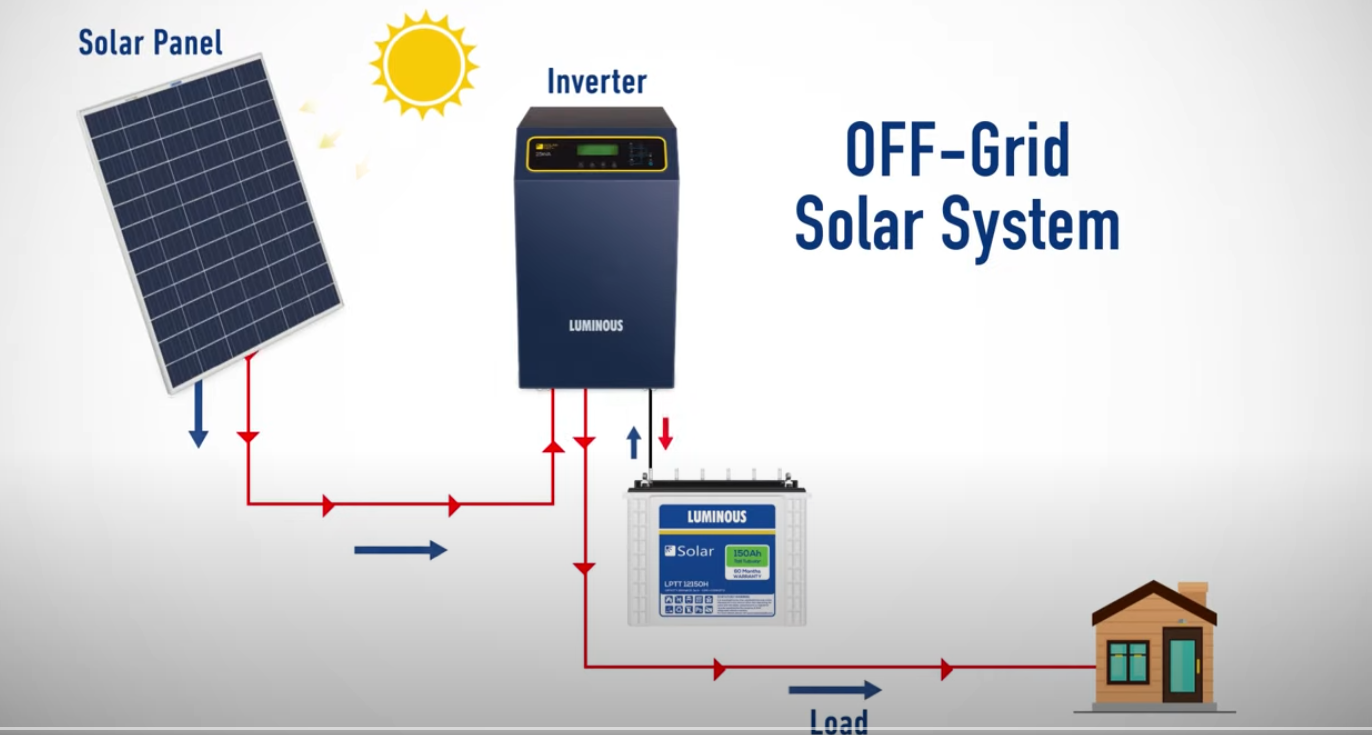
At its core, every off-grid solar system follows the same energy flow:
Sun → Solar Panels → Charge Controller → Batteries → Inverter → Your Loads
Let’s break this down.
Solar Panels: Capturing Energy from the Sun
Solar panels convert sunlight into direct current (DC) electricity using the photovoltaic effect.
Key points most people overlook.
- Panels produce less power on cloudy days
- Output drops with heat, not cold
- Dirt, shade, and orientation matter more than brand
In off-grid systems, panel sizing is critical because you cannot rely on the grid as backup.
I always design off-grid arrays with excess capacity, especially for winter months.
Charge Controller: Protecting Your Batteries
The charge controller sits between the panels and batteries.
Its job:
- Regulate voltage and current
- Prevent battery overcharging
- Improve charging efficiency
There are two main types:
- PWM (Pulse Width Modulation), cheaper, less efficient
- MPPT (Maximum Power Point Tracking), more expensive, far more efficient
In professional off-grid designs, MPPT controllers are non-negotiable.
They can extract 20–30% more energy, especially in cold climates.
Battery Bank: The Heart of an Off-Grid System
If solar panels are the muscles, batteries are the heart.
They store energy so you can use electricity.
- At night
- During cloudy days
- During storms or winter months
This is where most off-grid systems succeed or fail.
Common Battery Types:
- Lead-acid (Flooded, AGM, Gel)
- Lithium-ion (LiFePO₄)
Today, I strongly favor lithium iron phosphate (LiFePO₄) for most residential systems due to:
- Longer lifespan
- Deeper usable capacity
- Higher efficiency
- Lower long-term cost
Inverter: Turning DC into Usable Power
Solar panels and batteries operate on DC power, but your appliances use AC power.
The inverter converts DC to AC.
In off-grid systems, inverters must:
- Handle surge loads (motors, pumps, fridges)
- Run continuously
- Manage battery charging and load prioritization
Most modern off-grid inverters are hybrid inverters, meaning they can:
- Charge batteries
- Manage generators
- Balance loads automatically
Backup Generator (Yes, You Still Need One)
This surprises many people.
Even the best off-grid solar systems should include a generator.
Why?
- Extended cloudy periods
- Unexpected high loads
- Battery maintenance emergencies
I design systems so the generator runs rarely, but when it does, it prevents deep battery damage.
Types of Off-Grid Solar Power Systems
Not all off-grid systems are created equal.
Small Off-Grid Systems (Cabins, RVs, Tiny Homes)
Typical use cases:
- Weekend cabins
- Seasonal homes
- RVs and vans
Features:
- 1–4 kW solar array
- Modest battery storage
- Limited appliances
These systems are affordable but require energy discipline.
Full Residential Off-Grid Systems
This is where things get serious.
These systems can power:
- Refrigerators
- HVAC systems
- Washing machines
- Power tools
- Home offices
Typical specs.
- 6–15 kW solar array
- Large lithium battery banks
- Backup generator integration
Designing these systems requires detailed load analysis.
Hybrid Off-Grid Systems (Solar + Generator)
Some people call these “off-grid,” others call them “grid-optional.”
These systems.
- Operates most of the time
- Use generators or the grid only as backup
- Offer the best reliability
In my experience, hybrid systems are the smartest choice for most people.
How Much Do Off-Grid Solar Power Systems Cost?
This is the question everyone asks first.
Realistic Cost Ranges (US Market)
| System Size | Typical Cost |
|---|---|
| Small cabin | $8,000–$15,000 |
| Medium home | $20,000–$35,000 |
| Large home | $40,000–$70,000+ |
These costs include.
- Panels
- Batteries
- Inverter
- Balance of system
- Installation (varies)
Why Off-Grid Systems Cost More Than Grid-Tied
The main cost driver is battery storage.
Batteries can account for:
- 40–60% of the total system cost
However, when you compare this to
- Running power lines miles into rural land
- Monthly utility bills
- Rising electricity rates
The economics start to make sense.
Pros of Off-Grid Solar Power Systems
Total Energy Independence
You are immune to the following.
- Blackouts
- Grid failures
- Utility rate hikes
This peace of mind alone is priceless for many homeowners.
Ideal for Remote Locations
In rural areas, connecting to the grid can cost tens of thousands of dollars.
Off-grid solar often becomes the cheapest option.
Long-Term Cost Stability
Once installed.
- No monthly electric bills
- Predictable maintenance costs
- Energy for decades
Environmental Benefits
You reduce.
- Fossil fuel usage
- Carbon emissions
- Local pollution
Cons of Off-Grid Solar Power Systems
I always emphasize this part because honesty matters.
Higher Upfront Cost
Off-grid systems require more equipment and planning.
Energy Awareness Is Mandatory
You must.
- Understand your energy usage
- Avoid waste
- Plan for seasonal changes
System Design Is Critical
A poorly designed system leads to.
- Dead batteries
- Generator dependency
- Constant frustration
Common Off-Grid Solar Mistakes I See All the Time
Oversizing Panels but Undersizing Batteries
This is the #1 mistake.
Panels are cheap. Batteries are not.
But without enough storage, panels are useless at night.
Ignoring Winter Solar Production
Solar output in winter can drop 40–60%.
Every off-grid design must be based on worst-case scenarios, not averages.
No Load Calculation
I never design systems without a detailed load analysis.
Guessing leads to failure.
How to Size an Off-Grid Solar Power System
Step 1: Calculate Daily Energy Usage (kWh)
List all appliances and how long they run.
Example.
- Fridge: 1.5 kWh/day
- Lights: 1 kWh/day
- Electronics: 2 kWh/day
- Total: 4.5 kWh/day
Step 2: Account for System Losses
Add 20–30% for inefficiencies.
Step 3: Size Battery Storage (Days of Autonomy)
I recommend 2–3 days minimum.
Step 4: Size Solar Array for Worst Month
Always design for December or January, not July.
Is Going Off-Grid Worth It?
In my professional opinion.
Off-grid solar power systems are worth it if,
- You live in a remote area
- You want true energy independence
- You are willing to manage your energy usage
They are not ideal if
- You want unlimited power without thinking
- You live in a dense urban area
- You want the cheapest short-term solution
Off-Grid vs Grid-Tied vs Hybrid: My Honest Recommendation
If I had to choose for most people today:
1️⃣ Hybrid system – Best balance
2️⃣ Off-grid – For independence and remote living
3️⃣ Grid-tied – Cheapest, but least resilient
Future of Off-Grid Solar Power Systems
With:
- Falling battery prices
- Smarter inverters
- Better lithium chemistry
Off-grid living is becoming more accessible every year.
I expect off-grid and hybrid systems to dominate rural and semi-rural housing over the next decade.
FAQ: Off-Grid Solar Power Systems
Can you run a whole house off-grid with solar?
Yes, if the system is properly designed with enough panels, batteries, and backup.
Do off-grid systems work in winter?
Yes, but they must be sized for reduced sunlight.
How long do off-grid solar batteries last?
Lithium batteries typically last 10–15 years.
Is off-grid solar legal in the US?
Yes, but local codes and permits vary.
Final Thoughts From My Experience
Off-grid solar power systems are not just about technology.
They’re about:
- Self-reliance
- Planning
- Respecting energy as a resource
When designed correctly, they work beautifully.
When rushed or undersized, they become a nightmare.
If you’re serious about going off-grid, do it right the first time.
