


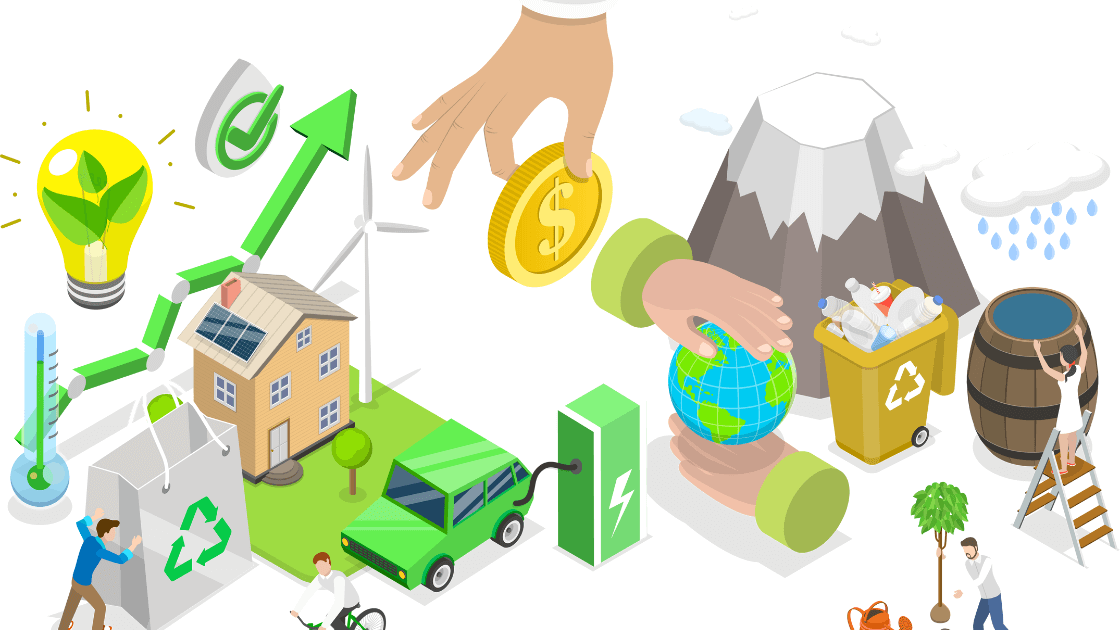
The world’s demand for green energy has never been stronger. As nations transition away from fossil fuels, the rise of renewable energy, especially solar and wind, continues to drive one of the fastest-growing investment sectors on the planet.
When demand for clean power increases, over time it tends to support strong valuations and long-term opportunities for investors.
But investing in renewables is not just about global interest and sustainability trends. Your returns can also depend on important external factors, such as the health of the global economy, government regulations, and energy policies.
Understanding how these elements influence the market helps you make more strategic and profitable decisions.
How Economic Growth Affects Solar Investments
When the global economy is healthy, energy demand normally rises. Consumers, industries, real estate developments, and transportation systems all require more electricity and as demand increases, energy prices often trend upward.
In strong market cycles, companies that generate energy, including renewable energy companies, may experience higher profitability and improved stock valuations.
How Regulations and Government Policies Impact Solar
Solar is a policy-driven industry. Around the world, governments influence clean energy growth in several ways:
- Setting minimum renewable energy targets
- Penalizing heavy fossil-fuel usage
- Providing tax incentives, rebates, or feed-in tariffs to accelerate solar adoption
- Offering grants or subsidies to encourage clean energy development
- Approving large utility-scale solar projects
These types of policies directly benefit green businesses by increasing demand for solar products, boosting installation rates, and creating a more predictable investment environment.
Why Invest in Renewable Energy?
Investing in renewable energy brings benefits that go far beyond financial returns. Some of the strongest reasons include:
✔ Invest According to Your Values
Choosing renewables allows investors to align their portfolios with their environmental or ethical principles. You can make money while contributing to a cleaner future.
✔ Technological Innovation Drives Growth
The solar industry is at the cutting edge of science and engineering. One major example is perovskite solar technology, which is already delivering higher efficiency rates and lower manufacturing costs. These breakthroughs translate into better profitability for companies that innovate successfully.
✔ Global Government Support
Most developed and emerging economies have pledged to reduce carbon emissions. Achieving those goals requires massive deployment of renewable energy strengthening long-term demand and supporting stable investment potential.
✔ Positive Macroeconomic Impact
Solar and wind energy generate jobs, stimulate rural and suburban development, and reduce national dependency on imported fossil fuels. Over time, lower imports and local manufacturing can increase economic output.
What to invest in solar energy?
Invest in Solar Stocks
Over the past decade, the solar industry has achieved an average global annual growth rate of over 50%, an impressive sign of strong sector momentum.
As worldwide demand catches up with oversupply from Chinese manufacturing, the profitability of solar companies is likely to improve.
Solar stocks can be rewarding for investors who believe in long-term market expansion. You can invest in:
- Publicly traded solar companies
- Solar ETFs (Exchange Traded Funds)
- Yieldcos specializing in renewable energy projects
- Manufacturers of solar panels and inverters
- Solar financing or solar utility companies
Solar panel adoption remains financially compelling in regions with high electricity costs, strong sunshine, and good rebates, such as Australia, the U.S., Mexico, and much of Europe.
Even though upfront installation costs vary, payback periods are shortening, and rooftop solar is increasingly viewed as both an energy hedge and a financial asset.
Invest in Land Development for Utility-Scale Solar
Utility-scale solar farms require land, engineering, environmental analysis, and long-term power purchase agreements (PPAs) with utilities or corporations. Investors involved in these large-scale projects enjoy several advantages:
- Attractive long-term ROI
- Contracts that secure revenue over 10–25 years
- Cash flows tied to inflation
- Low volatility due to predictable energy demand
- Year-round income
- Meaningful contribution to clean-energy transition
Utility-scale solar development is typically suited for investors with a medium-to-long horizon or for those looking to participate through structured partnerships, private funds, or cooperatives.
Profit from Solar Installation Projects
Solar installation is one of the fastest-growing service industries in the world.
Governments often provide:
- Tax credits
- Direct rebates
- Grant programs
- Net-metering systems
These incentives reduce the overall cost of installation, improve affordability for consumers, and create thriving local installation businesses.
Net metering, in particular, allows homeowners to sell excess solar energy back to the grid, turning a rooftop system into a revenue-generating asset.
Whether you invest in a solar installation company or operate one yourself, recurring demand and supportive policy frameworks can generate consistent income.
Invest in Solar Manufacturing
Solar panel, inverter, electrical component, and battery manufacturing sit at the other end of the industry’s supply chain. The world needs more manufacturing capacity to meet demand from residential, commercial, and utility sectors.
Innovative PV panel technology and assembly companies often seek early-stage capital. Manufacturing investments can:
- Increase access to electricity in underserved regions
- Promote economic development
- Improve energy efficiency
- Support global climate goals
Manufacturing investments carry higher risk than public stocks but can generate substantial returns if a company successfully scales.
Become a Solar Homeowner
Buying home solar panels is more than a home upgrade. It is a long-term financial investment with real ROI.
Benefits include:
- Lower monthly electricity bills
- Potentially higher property value
- Protection from rising energy prices
- Net metering revenue
- Environmental advantages
Once you install solar, you immediately begin reducing your utility bill. Over time, the system pays for itself and continues delivering returns for 20–30 years.
Homeowners can research incentives and rebates offered in their local area, often through clean-energy councils or local regulatory programs.
Pros and Cons of Investing in Solar
Pros
- Sustainable long-term growth market
- Attractive tax incentives and rebates
- Strong global policy support
- Increasing efficiency and technological improvements
- Potentially stable, contracted energy revenue
Cons
- Policy changes can affect profitability
- Price volatility in raw materials (polysilicon, lithium, copper)
- Younger companies may lack financial stability
- Technological disruption risk
- Sector is still partially dependent on regulatory incentives
Diversification is key
Instead of going all-in on one stock or solar business, spreading investments across multiple companies, funds, or technologies can limit exposure and smooth long-term returns.
Is Solar a Good Investment Stock?
Historically, solar stocks have experienced:
- Periods of explosive growth
- Short periods of contraction tied to supply issues
- Market cycles driven by global policy and technology shifts
However, solar is projected to become the world’s largest source of electricity generation, and it is expected to surpass coal by 2027.
As deployment expands, the long-term valuation outlook remains strong for companies with solid balance sheets, stable demand, and strong innovation pipelines.
One of the most powerful endorsements for renewable investing comes from Warren Buffett. As of early 2023, Berkshire Hathaway had invested more than $30 billion in solar and wind, demonstrating that renewables can be both sustainable and profitable at scale.
FAQ: Is Solar Energy a Good Investment?
Is investing in solar energy profitable?
Solar can be highly profitable when approached strategically. Investors can earn returns through solar company stocks, utility-scale solar projects, rooftop net-metering systems, or manufacturing ventures.
Profitability depends on local incentives, energy prices, technology innovation, and long-term demand.
As solar adoption accelerates worldwide, financial performance tends to improve over time, especially for well-capitalized companies with stable contracts.
How long does it take for solar panels to pay for themselves?
Payback periods vary based on the cost of installation, sunlight levels, electricity rates, rebates, and net-metering rules.
In many regions, homeowners recover their initial investment in 5 to 10 years, after which the system continues generating nearly free power for decades.
Utility-scale solar projects often use long-term power purchase agreements (PPAs) to ensure predictable income over 15 to 25 years.
What are the biggest risks of investing in solar?
Common risks include:
- Changing government policies or incentives
- Raw material price volatility (silicon, lithium, copper, etc.)
- Innovation risk, where newer technology replaces older systems
- Operational risk for companies with weak financing or inconsistent management
Diversifying across multiple solar companies, ETFs, or solar asset classes can reduce exposure to these risks.
Are solar stocks a better investment than fossil-fuel stocks?
Solar stocks are more aligned with long-term energy trends, but fossil-fuel stocks may still provide strong dividends and short-term cash flow.
Many investors use a blended approach to manage volatility. As global economies shift away from fossil fuels, renewable energy stocks may deliver higher upside, especially when adoption accelerates.
What are the main ways to invest in solar energy?
Investors have multiple options:
- Publicly traded solar companies
- Solar-focused ETFs
- Solar financing and lease providers
- Direct investment in solar farms
- Manufacturing ventures
- Residential rooftop solar systems (net metering)
Each option has different risk levels and liquidity characteristics, so your choice should match your capital, time horizon, and risk tolerance.
Is solar a long-term investment?
Yes. Solar is typically a medium-to-long-term investment, designed to generate steady returns over 10 to 30 years.
Renewable energy projects often rely on contracts, predictable energy demand, and inflation-linked pricing, which give investors financial stability and recurring income.
What affects the value of solar companies?
Solar company valuation can be influenced by:
- Electricity demand
- Government incentives
- Technology development and efficiency improvements
- Cost of capital
- Supply chain availability
- Competition from other energy sources
Strong policy environments, high energy prices, low manufacturing costs, and innovation all support higher valuations.
Do solar investments help the environment?
Yes. Solar investments reduce greenhouse gas emissions, increase access to clean electricity, support sustainable economic development, and help nations transition toward lower-carbon energy systems.
Every kilowatt-hour generated by solar displaces fossil-fuel combustion, improving air quality and public health.
Can I earn income from rooftop solar?
Absolutely. Homeowners participate in net metering, where they sell excess energy to the grid and receive credit on their electric bill.
In some markets, homeowners also receive payments for energy generation through feed-in tariffs, community solar programs, or renewable energy certificates. Over the lifetime of a system, these incentives can produce a meaningful passive income stream.
Are solar ETFs a good option for beginners?
Yes. Solar ETFs allow investors to diversify across many renewable energy companies without having to pick winners individually.
They reduce volatility and provide exposure to the sector’s long-term growth, making them a strong entry point for new investors.
Is utility-scale solar better than rooftop solar as an investment?
They serve different purposes. Utility-scale solar projects generate contracted revenue for investors, often with inflation-adjusted returns over decades.
Rooftop solar provides savings, reduced energy bills, net-metering credits, and property value benefits.
Utility-scale investments are driven by cash flow; rooftop solar is both a financial and lifestyle choice.
Final Thoughts
Investing in renewable energy especially solar can be financially rewarding while supporting one of the most important energy transitions in history.
The key is to understand the industry, diversify your exposure, and pay attention to evolving policies, technology breakthroughs, and long-term energy demand.
As with all financial decisions, remember:
Your capital is at risk. Investment values can rise or fall, and returns are not guaranteed.
If you plan your investment strategy well, renewable energy can become a meaningful contributor to both your portfolio and the future of the planet.
