I’ve spent many years working in the solar energy industry, designing systems, troubleshooting underperforming installations, and helping homeowners and businesses understand what type of solar setup actually makes sense for their situation.
Obviously, I’ve learned that not all solar power systems are equal, and selecting the incorrect type can lead to financial losses, reduced reliability, or both.
One of the most common and often misunderstood types of solar installations is the grid-tied solar power system.
In this guide, I’ll explain exactly what grid-tied solar power systems are, how they work, their advantages and disadvantages, costs, and who they are best suited for.
I’ll also share insights from real-world installations and practical considerations that may not always be evident in sales brochures.
If you’re considering solar and want a clear, honest, expert-level explanation, this article is for you.
What Is a Grid-Tied Solar Power System?
A grid-tied solar power system (also called a grid-connected solar system) is a solar energy system that is directly connected to the public utility grid.
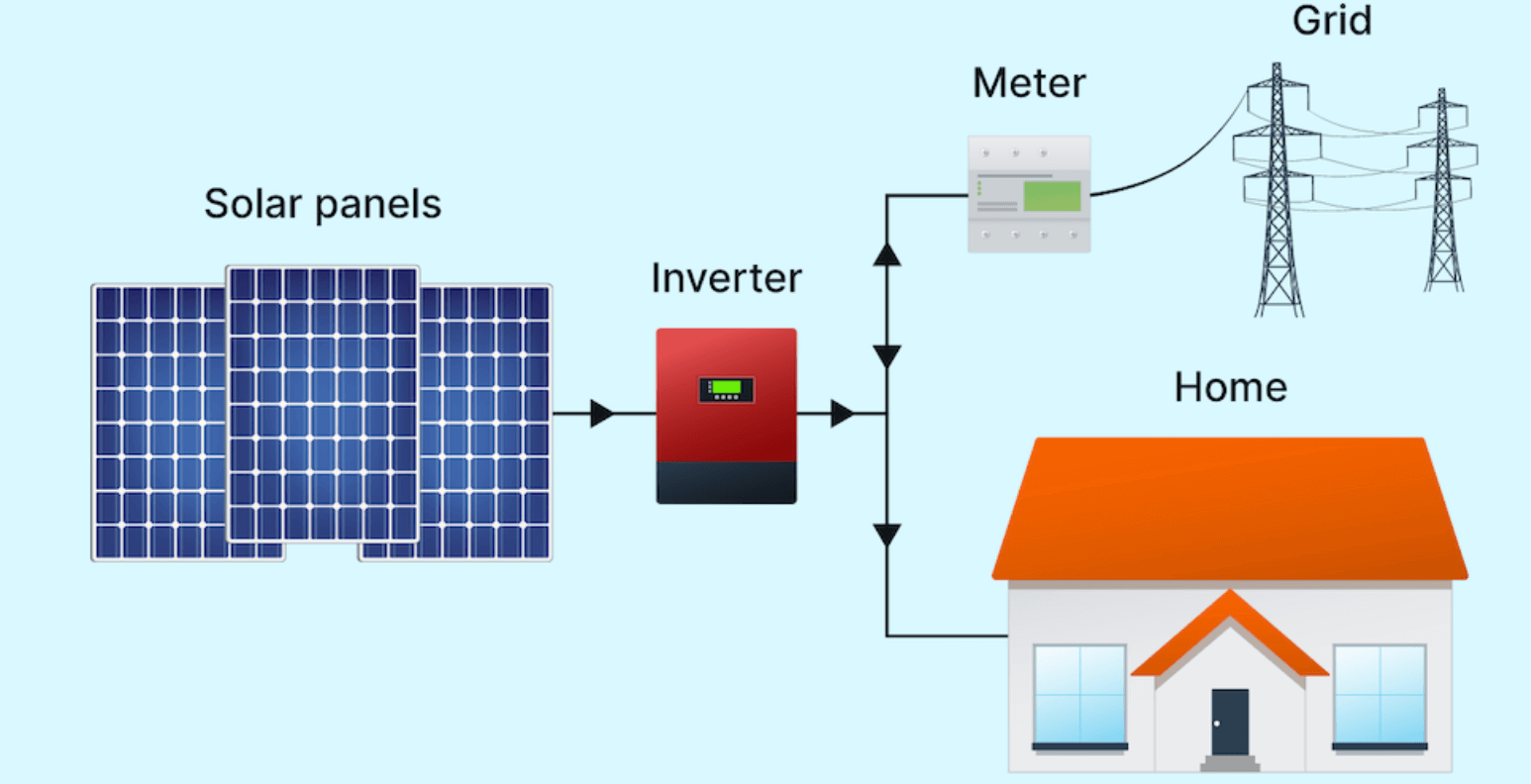
In simple terms, this is how it works.
- Your solar panels produce electricity during the day.
- Your home or business uses solar power first.
- Any extra electricity is sent back to the utility grid.
- When solar production isn’t enough, you pull power from the grid.
Unlike off-grid systems, grid-tied systems do not rely on batteries (in most cases). Instead, the utility grid acts as your backup power source.
From an engineering and economic standpoint, grid-tied solar power systems are the most common and cost-effective solar solution worldwide.
How Grid-Tied Solar Power Systems Work (Step by Step)
To truly understand grid-tied solar power systems, you need to understand how electricity flows through the system.
Solar Panels Generate DC Electricity
Solar panels convert sunlight into direct current (DC) electricity using the photovoltaic effect. This happens whenever sunlight hits the solar cells. There’s no movement, no fuel, and no noise.
The amount of electricity produced depends on many factors, such as
- Sunlight intensity
- Panel orientation and tilt
- Temperature
- Shading
- Panel efficiency
Factors That Affect Solar Panel Electricity Production
The Inverter Converts DC to AC Power
Homes and businesses use alternating current (AC) electricity. This is where the solar inverter comes in.
The main function of the inverter is to.
- Converts DC power from the panels into usable AC power
- Synchronizes voltage and frequency with the utility grid
- Ensures safety and compliance with grid standards
Without an inverter, grid-tied solar simply wouldn’t work.
Power Is Used On-Site First
One of the biggest advantages of grid-tied solar power systems is self-consumption.
When your system produces electricity.
- Your appliances use solar energy first
- This immediately reduces the amount of electricity you buy from the utility
This is where most of your savings come from.
Excess Power Is Exported to the Grid
If your system produces more electricity than you’re using at that moment, the excess energy flows back into the utility grid.
Depending on your local regulations, this may earn you one or more of these benefits.
- Net metering credits
- Feed-in tariffs
- Energy credits applied to future bills
The Grid Supplies Power When Solar Isn’t Enough
At night or during cloudy weather, your solar panels produce little or no power. When that happens:
- Electricity is automatically drawn from the grid.
- Your home continues operating without interruption.
This seamless switching is why grid-tied systems are so popular.
Main Components of a Grid-Tied Solar Power System
Even though grid-tied systems are simpler than off-grid ones, they still rely on several critical components.
Solar Panels
These are the heart of the system. Most grid-tied systems use:
- Monocrystalline panels (higher efficiency)
- Polycrystalline panels (lower cost)
Grid-Tied Inverter
This is the device that will convert the DC electricity that the solar panel produces to the alternating current that we use in everyday life.
The inverter must be certified for a grid connection and must include anti-islanding protection as well as voltage and frequency synchronization.
- Anti-islanding protection
- Voltage and frequency synchronization
- Utility-approved safety features
Mounting Structure
There are many structures you can use to install solar panels; the most common ones are the following.
- Roofs (most common)
- Ground mounts
- Carports
AC and DC Disconnects
The disconnectors are safety shut-off elements. These allow the system to be safely shut down.
- Maintenance
- Emergencies
- Utility servicing
Net Meter or Bi-Directional Meter
In grid-tied solar power systems, you will need a bidirectional meter. This meter tracks the following.
- Electricity imported from the grid
- Electricity is exported back to the grid
Advantages of Grid-Tied Solar Power Systems
After designing and evaluating countless solar installations, I can confidently say that grid-tied solar power systems offer some of the strongest advantages in solar energy.
Lower Upfront Cost
Because grid-tied systems typically do not require batteries, they are significantly cheaper than off-grid or hybrid systems.
Batteries can be very expensive. The main cost of solar batteries is in…
- 30%–50% of the total system cost
- Ongoing replacement expenses
Removing batteries makes grid-tied solar far more accessible.
Maximum Energy Efficiency
Grid-tied systems are highly efficient because.
- No energy is lost storing power in batteries
- Excess energy is immediately exported to the grid
From a pure efficiency standpoint, this is difficult to beat.
Reduced Electricity Bills
This is the primary reason most people go solar.
Grid-tied systems allow you to.
- Offset daytime electricity use
- Earn credits for excess production
- Lower monthly utility bills dramatically
In some cases, I’ve seen homes reduce their bills by 70–95%.
Net Metering Benefits
In regions with net metering, grid-tied systems shine.
Net metering allows.
- One-to-one credit for exported electricity
- Seasonal balancing (summer overproduction offsets winter use)
This effectively turns the grid into a “virtual battery.”
Simple Design and Maintenance
Grid-tied systems are simple, and it is straightforward to maintain them compared with other solar power systems. Hence they,
- Have fewer components
- Are easier to design
- Require less maintenance
- Have fewer failure points
This simplicity translates into reliability.
Disadvantages of Grid-Tied Solar Power Systems
As much as I appreciate grid-tied systems, I’m also very honest about their limitations.
No Power During Grid Outages
This surprises many people.
For safety reasons, standard grid-tied solar systems shut down during blackouts. This prevents electricity from feeding into the grid and endangering utility workers.
If grid reliability is a concern where you live, this is a serious drawback.
Dependence on Utility Policies
You are not completely independent. Your savings depend heavily on the following circumstances.
- Net metering rules
- Utility compensation rates
- Regulatory changes
I’ve seen policy shifts dramatically affect system payback.
No Energy Independence
If your goal is full energy independence, grid-tied systems alone won’t achieve that.
They are designed for cost savings, not autonomy.
Grid-Tied vs Off-Grid vs Hybrid Solar Systems
One of the most common questions I get is how grid-tied systems compare to other options.
Grid-Tied Systems
Best for:
- Urban and suburban homes
- Areas with reliable grid power
- Cost-focused solar adopters
Off-Grid Systems
Best for:
- Remote locations
- No grid access
- Full energy independence
Hybrid Systems
Best for:
- Backup power needs
- Partial energy independence
- High grid outage areas
From a professional standpoint, grid-tied systems are usually the smartest starting point.
How Much Do Grid-Tied Solar Power Systems Cost?
Costs vary widely based on.
- System size
- Location
- Equipment quality
- Labor rates
- Permitting
Typical Residential Costs (Before Incentives)
- Small system (3–5 kW): $6,000–$12,000
- Medium system (6–10 kW): $12,000–$20,000
- Large system (10+ kW): $20,000+
Payback Period
In most cases, payback occurs within:
- 5–8 years (high electricity costs)
- 8–12 years (moderate rates)
After payback, electricity is essentially free.
Who Should Choose a Grid-Tied Solar Power System?
Based on my experience, grid-tied systems are ideal if.
- You have access to a reliable utility grid
- You want to lower your electricity bills
- You prefer lower upfront costs
- You don’t need backup power
- You want a simple, proven solution
If that sounds like you, grid-tied solar is probably the right choice.
Common Myths About Grid-Tied Solar Power Systems
Solar Panels Don’t Work Without Batteries
False. Most solar systems worldwide operate without batteries.
Grid-Tied Solar Is Too Complicated
In reality, it’s the simplest solar configuration.
Solar Won’t Work in Cloudy Areas
Modern panels work efficiently even with indirect sunlight.
Maintenance and Lifespan
Grid-tied systems are very low-maintenance.
Typical lifespan.
- Solar panels: 25–30 years
- Inverters: 10–15 years
Basic maintenance includes.
- Occasional cleaning
- System monitoring
- Inverter replacement after a decade or so
Is a Grid-Tied Solar Power System Worth It?
From a professional and financial perspective, yes, absolutely, for the right person.
Grid-tied solar power systems offer.
- Strong ROI
- Proven technology
- Low risk
- Immediate bill savings
They are often the smartest way to enter solar energy without overcomplicating things.
FAQ: Grid-Tied Solar Power Systems
What is a grid-tied solar power system?
A grid-tied solar power system is a solar installation that connects directly to the public utility grid. In this setup, your solar panels generate electricity during the day, your home or business uses that power first, and any excess energy is sent back to the grid.
When solar production isn’t enough, electricity is automatically drawn from the grid. This is, in my opinion, the most prevalent and reasonably priced kind of solar system in the world.
Do grid-tied solar power systems work during a power outage?
During a power outage, conventional grid-tied solar power systems malfunction. For safety reasons, the inverter shuts down when it detects a grid failure to prevent electricity from feeding back into the grid and endangering utility workers.
If backup power is important to you, I usually recommend adding batteries or choosing a hybrid solar system instead.
Do grid-tied solar systems need batteries?
No, grid-tied solar systems do not require batteries to operate. The utility grid effectively serves as your backup power source.
This is one of the main reasons grid-tied systems are more affordable and simpler than off-grid or hybrid systems.
In my professional opinion, skipping batteries makes sense unless you specifically need backup power or energy independence.
How much can I save with a grid-tied solar power system?
Savings depend on factors like system size, electricity rates, sunlight availability, and net metering policies.
In many real-world installations I’ve worked on, homeowners reduce their electricity bills by 50% to 95%. In some cases, especially with favorable net metering, monthly bills can drop close to zero.
What is net metering, and how does it work with grid-tied solar?
Net metering is a billing arrangement where excess electricity your solar system sends to the grid earns you credits on your utility bill.
These credits can offset the electricity you use at night or during low-sun periods. I often describe net metering as using the grid like a “virtual battery,” without the cost or maintenance of physical batteries.
Are grid-tied solar power systems safe?
Yes, grid-tied solar power systems are very safe when properly designed and installed. Modern inverters include multiple safety features such as anti-islanding protection, automatic shutdown, and grid synchronization.
When installed to code, these systems meet strict electrical and utility safety standards.
How long do grid-tied solar power systems last?
Most grid-tied solar systems have a long lifespan. Solar panels typically last 25 to 30 years, while grid-tied inverters usually last 10 to 15 years.
In my experience, the inverter is the component most likely to need replacement during the system’s lifetime, while panels continue producing power well beyond their warranty period.
Is a grid-tied solar power system worth it?
For most homes and businesses with reliable grid access, yes, grid-tied solar power systems are absolutely worth it.
They offer the lowest upfront cost, a strong return on investment, minimal maintenance, and immediate energy savings.
If your primary goal is to lower electricity bills rather than achieve total energy independence, this is usually the smartest solar option.
Can I add batteries to a grid-tied solar system later?
Yes, often, you can add batteries later, especially if your system uses a hybrid or battery-ready inverter.
I often advise planning during the initial design stage if you think backup power might be important in the future. Retrofitting is possible, but designing for it upfront is usually more cost-effective.
How big should a grid-tied solar power system be?
The ideal system size depends on your electricity usage, roof space, budget, and local utility rules. I typically size systems to offset 70% to 100% of annual electricity consumption, depending on net metering limits and financial goals. A proper energy audit is essential before choosing system size.
Do grid-tied solar systems increase home value?
Yes, multiple studies and real estate trends show that homes with grid-tied solar power systems often sell faster and at higher prices.
Buyers value lower energy bills and long-term savings. The industry views a well-installed solar system as an asset, not a liability, based on my observations.
What happens if my solar system produces more electricity than I use?
Any excess electricity produced by your grid-tied solar power system is exported to the utility grid. Depending on local regulations, you may receive bill credits, financial compensation, or energy credits that roll over to future months. This kind of benefit is one of the biggest financial advantages of grid-tied solar.
Is grid-tied solar better than off-grid solar?
Neither is universally “better.” They serve different purposes. Grid-tied solar is better for cost savings and simplicity, while off-grid solar is better for energy independence and remote locations.
Based on my professional experience, grid-tied systems are the best option for most homes and businesses that are connected to the grid.
Final Thoughts From My Experience
After years in the solar industry, I still believe grid-tied solar power systems are the backbone of the global solar transition.
They’re practical.
They’re efficient.
They make financial sense.
If your goal is to save money, reduce your carbon footprint, and adopt clean energy without unnecessary complexity, a grid-tied solar power system is difficult to beat.
